Unlocking the secret to strong, toned legs isn’t just about hitting the gym hard; it’s about working smart. If you’ve ever wondered why your leg workouts aren’t delivering the results you crave, you’re not alone.
Leg muscles are some of the largest in your body, and building them requires a strategic approach. Imagine striding with power, feeling confident in your favorite jeans, and knowing that each step is supported by strong, sculpted muscles. You deserve to experience that transformation.
In this guide, we’ll dive into the most effective techniques to build muscle in your legs, ensuring your efforts lead to visible, satisfying progress. Ready to discover what your legs are truly capable of? Keep reading to learn how to maximize your workouts and achieve the results you’ve been dreaming of.

Credit: www.youtube.com
Leg Anatomy Basics
Understanding leg anatomy is vital for building muscle effectively. Legs are complex structures with various muscles. Each muscle plays a unique role in movement and strength. Knowing these muscles helps target exercises for balanced growth.
The Quadriceps
The quadriceps are the muscles on the front of the thigh. They consist of four main parts. These are vastus lateralis, vastus medialis, vastus intermedius, and rectus femoris. They are essential for extending the knee. Strong quadriceps improve running and jumping ability.
Hamstrings
The hamstrings are located at the back of the thigh. They include the biceps femoris, semitendinosus, and semimembranosus. These muscles help with knee flexion and hip extension. Well-developed hamstrings contribute to sprint speed and balance.
Calves
Calves are found in the lower leg. The gastrocnemius and soleus make up the calf muscles. They assist with plantar flexion of the foot. Strong calves are crucial for jumping and stability.
Gluteal Muscles
Gluteal muscles are the largest muscles in the body. They include the gluteus maximus, medius, and minimus. These muscles control hip movement. Powerful glutes enhance posture and athletic performance.
Adductors
Adductors are located on the inner thigh. These muscles pull the legs towards the body’s midline. They play a role in maintaining balance. Strong adductors stabilize the pelvis and improve agility.
Abductors
Abductors are on the outer thigh. They move the legs away from the body’s center. These muscles are key for side-to-side motions. Strengthening abductors aids in lateral movements and balance.
Key Muscle Groups
Strong legs rely on building key muscle groups such as quadriceps, hamstrings, and calves. Exercises like squats and lunges effectively target these areas, promoting muscle growth and strength. Consistent training and proper form ensure balanced development and reduce injury risk.
Building muscle in your legs requires understanding the key muscle groups that contribute to strength and shape. Knowing these groups helps you target specific areas for growth and avoid imbalances. Let’s dive into the major players in your lower body: quadriceps, hamstrings, calves, and glutes. Each muscle group plays a unique role in your leg workouts and daily movements.Quadriceps
Your quadriceps, located at the front of your thighs, are crucial for movements like squats and lunges. They consist of four muscles that help extend your knee and stabilize your body during activities. Imagine how it feels when you climb stairs or sprint. Your quads are working hard. To build them effectively, try exercises like leg presses and step-ups. Don’t forget to challenge yourself. Aim for variety in your routine to keep your quads guessing and growing.Hamstrings
Hamstrings are at the back of your thighs. They play a key role in bending your knee and extending your hip. Ever tried to kick a ball or run fast? Your hamstrings are the stars of the show. Focus on exercises like deadlifts and leg curls to strengthen these muscles. They’re essential for preventing injuries and improving your overall leg power. Feeling tightness after a workout? That’s your hamstrings asking for a good stretch. Listen to your body.Calves
Calves might be small, but they pack a punch. These muscles support you in walking, running, and jumping. They’re responsible for the up-and-down movement of your feet. Think about how you stand on tiptoe or sprint across the park. Your calves are doing the heavy lifting. Try calf raises and seated calf extensions to build them. Consider how your calves handle daily activities. Strong calves make movements smoother and more efficient.Glutes
The glutes are the powerhouse of your lower body. They are responsible for hip extension, rotation, and stabilization. When you squat, jump, or run, your glutes are driving the motion. Ever noticed how athletes have well-defined glutes? That’s because they focus on exercises like squats, hip thrusts, and lunges. These movements help shape and strengthen your glutes. Ask yourself: Are you engaging your glutes enough in your workouts? Challenge them with proper form and resistance for noticeable gains. Understanding these muscle groups and how they work can transform your leg workouts. Are you ready to take your leg day to the next level?Effective Leg Exercises
Building muscle in your legs requires effective exercises like squats and lunges. These workouts target major leg muscles, enhancing strength and size. Consistent practice improves muscle tone and endurance.
Building muscle in your legs is crucial for overall strength and fitness. Not only do strong legs support your body, but they also improve your performance in various physical activities. To achieve well-defined leg muscles, incorporating effective exercises into your routine is essential. Below, we’ll discuss some of the most effective leg exercises that can help you build strong and muscular legs.Squats
Squats are a powerhouse exercise for developing leg strength. They target multiple muscle groups, including your quadriceps, hamstrings, and glutes. Start with your feet shoulder-width apart and lower your body as if sitting back into a chair. Keep your chest up and core engaged. Remember to push through your heels as you return to standing. Aim for 3 sets of 10-12 reps. Gradually add weight as you become more comfortable with the movement.Lunges
Lunges are excellent for building leg muscle while also improving balance and coordination. They focus on your quads, glutes, and hamstrings. To perform a lunge, step forward with one leg and lower your hips until both knees are bent at a 90-degree angle. Ensure your front knee doesn’t go past your toes. Alternate legs and complete 3 sets of 10 reps per leg. Feel free to hold dumbbells for added resistance once you master the form.Deadlifts
Deadlifts are a fundamental exercise that works your entire posterior chain, including your hamstrings and glutes. They also strengthen your lower back. Stand with your feet hip-width apart, grip a barbell or dumbbells, and hinge at the hips to lower the weight to the ground. Keep your back straight and core tight. Lift by driving through your heels and squeezing your glutes. Start with 3 sets of 8-10 reps. Focus on proper form to avoid injury.Leg Press
The leg press machine is a great tool for isolating your leg muscles and adding variety to your workouts. It primarily targets the quads, but also works the hamstrings and glutes. Sit on the machine with your feet shoulder-width apart on the platform. Lower the weight until your knees are at a 90-degree angle, then press back up. Perform 3 sets of 10-12 reps. Adjust the weight as needed to challenge your muscles while maintaining control. Have you ever noticed how your energy levels spike after a leg workout? That’s the magic of releasing endorphins while building strength. Make sure to incorporate these effective exercises into your routine. Your legs will thank you for it!Incorporating Resistance Training
Strengthen leg muscles effectively by incorporating resistance training. Focus on exercises like squats, lunges, and leg presses. Consistent practice with proper form enhances muscle growth and builds strength.
Building strong leg muscles requires a consistent and strategic approach. Resistance training is a key component. It helps in strengthening and enlarging your leg muscles. This method involves challenging your muscles to work against a force. It’s effective and adaptable to different fitness levels. Let’s explore the different ways to incorporate resistance training.Free Weights
Free weights are versatile and effective. Dumbbells and barbells are common choices. They engage stabilizing muscles. This leads to better muscle coordination and growth. Squats and lunges are excellent exercises. They target major leg muscles. Start with lighter weights. Gradually increase as strength improves.Resistance Bands
Resistance bands are easy to use and portable. They are great for home workouts. Bands provide constant tension. This increases muscle activation. Exercises like banded squats and leg curls are effective. They help in building leg muscles without heavy equipment. Adjust band tension to increase or decrease resistance.Machine Exercises
Gym machines offer guided movement. They are ideal for targeting specific muscles. Leg press and leg extension machines are popular. They isolate and strengthen different muscle groups. Machines provide support and reduce injury risk. They are suitable for beginners and advanced users. Adjust settings to match your fitness level. `Progressive Overload Techniques
Building muscle in your legs requires a strategic approach, and one of the most effective methods is using progressive overload techniques. This method involves gradually increasing the demand on your muscles, forcing them to adapt and grow stronger over time. By systematically challenging your legs, you can achieve noticeable results and break through plateaus. Let’s dive into some practical strategies that can help you maximize your leg workouts.
Increasing Weights
One straightforward technique to apply is increasing the weights you lift. Each week, try adding a small amount to your squats or leg presses. It could be as little as 2-5 pounds. You’ll be surprised how these small increments can make a big difference over time. I remember adding just five pounds to my leg press and feeling a significant challenge. Your muscles respond to this new stimulus, growing stronger and more defined.
Adjusting Repetitions
Another approach is tweaking the number of repetitions. If you usually do 10 reps, try for 12-15. This change keeps your muscles guessing and prevents your body from getting too comfortable. It also helps improve endurance. Think about the last time you pushed for those extra reps and felt the burn in your quads. That’s your muscles adapting and getting ready for growth.
Varying Intensity
Changing the intensity of your workouts can also promote muscle growth. You can achieve this by altering your rest periods or incorporating supersets. Try reducing your rest period by 10 seconds and see how it impacts your workout. It’s like adding a mini challenge without changing the weights. Or consider adding a set of lunges immediately after squats. This intensity variation keeps your muscles engaged and on their toes. Have you tried adjusting intensity and noticed how your legs feel different? It’s a powerful tool.
By applying these progressive overload techniques, you’ll not only build muscle but also enhance your overall leg strength and endurance. What’s holding you back from pushing your limits? Start implementing these tactics and watch your leg muscles transform.

Credit: www.youtube.com
Importance Of Nutrition
Building muscle in your legs requires more than just exercise. Nutrition plays a crucial role. It fuels your workouts and aids recovery. Without proper nutrition, your efforts may go in vain.
Consuming the right nutrients helps muscles repair and grow. It boosts your energy levels. Let’s explore key nutritional elements for leg muscle growth.
Protein Intake
Protein is vital for muscle growth. It repairs damaged muscle fibers. Aim for a protein-rich diet. Include lean meats, fish, and eggs in your meals. Plant-based proteins like beans and lentils are also beneficial.
Consider protein shakes for added intake. They are convenient and effective. Ensure you consume protein after workouts. This aids in muscle recovery and growth.
Carbohydrate Needs
Carbohydrates provide energy for workouts. They are essential for muscle building. Choose whole grains, fruits, and vegetables. These offer sustained energy release.
Carbs refill glycogen stores in muscles. This is important after intense exercise. Balance your carb intake with your activity level.
Hydration
Staying hydrated is crucial for muscle function. Water helps transport nutrients to your muscles. It also aids in digestion and joint lubrication.
Drink water before, during, and after workouts. Dehydration can lead to muscle cramps. Keep a water bottle handy at all times.
Recovery And Rest
Building strong leg muscles isn’t just about intense workouts. Recovery and rest are key components in muscle growth. Without proper recovery, muscles cannot repair or grow effectively. Rest allows muscles to rebuild stronger. This process is vital after strenuous leg exercises. Let’s explore essential recovery methods.
Sleep Quality
Good sleep is crucial for muscle recovery. During sleep, the body repairs muscle fibers. Aim for 7-9 hours of quality sleep each night. A consistent sleep schedule supports muscle growth. Dark, quiet environments enhance sleep quality. Avoid screens before bedtime for better rest.
Stretching
Stretching helps improve flexibility and blood flow. It reduces muscle tightness after workouts. Focus on leg muscles like quads, hamstrings, and calves. Hold each stretch for at least 15-30 seconds. Perform stretches after workouts or before bed. This habit aids in quicker recovery.
Foam Rolling
Foam rolling is a self-massage technique. It releases muscle tension and knots. Roll each major leg muscle for 1-2 minutes. This helps reduce soreness and improve flexibility. Perform foam rolling after workouts or in the evening. Regular use enhances muscle recovery and performance.
Tracking Progress
Boost leg muscle growth by tracking progress regularly. Measure strength gains with exercises like squats and lunges. Keep notes on weights and reps to see improvements over time.
Tracking your progress is crucial when aiming to build muscle in your legs. It’s easy to get lost in the routine of workouts, but without measuring growth, how do you know if you’re truly advancing? By effectively tracking your progress, you can celebrate small wins and make necessary adjustments to your plan. Let’s dive into how recording workouts, measuring growth, and adjusting plans can keep you on the path to success.Recording Workouts
Documenting your workouts is like capturing snapshots of your journey. Keep a log of exercises, sets, and reps. This can be done using a journal or a fitness app. After each leg workout, jot down what you did and how it felt. Did you push through an extra set? Was the weight manageable or challenging? These notes help you identify patterns and recognize when it’s time to up the ante. Consistency is key. Record workouts regularly, and you’ll have a clear picture of your progress over time.Measuring Growth
Seeing physical changes in your legs can be incredibly motivating. Measure your leg growth using a tape measure. Focus on areas like your thighs and calves. Take measurements at regular intervals, such as every four weeks. Compare these numbers to see tangible progress. Don’t just rely on the scale. Muscle weighs more than fat, so numbers might not tell the full story. Photos can be a powerful tool. Snap progress pics to visually track changes.Adjusting Plans
Your body might not always respond as expected. If you’re not seeing desired results, it might be time to tweak your workout plan. Look at your recorded workouts for clues. Maybe your routine needs more variety. If squats and lunges dominate your plan, try adding deadlifts or leg presses. Diet plays a role too. Ensure you’re getting enough protein to support muscle growth. Sometimes, the smallest changes can lead to the biggest improvements. Are you challenging yourself enough? If your workouts feel too easy, increase the weight or reps. Push your limits to stimulate muscle growth. Remember, progress is personal. What works for others might not work for you, so adjust based on your unique needs and goals. Tracking progress keeps your muscle-building journey on course. How will you make your next leg day count?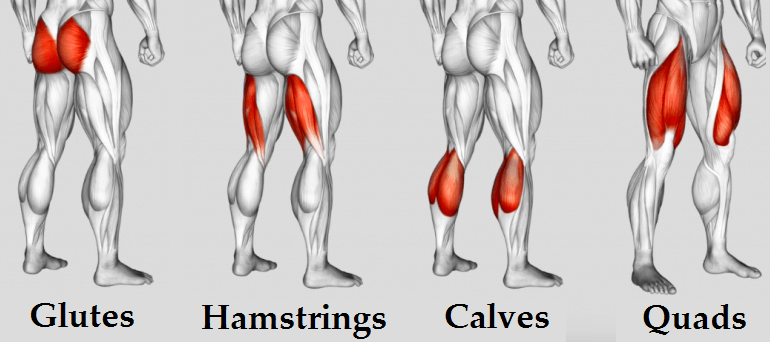
Credit: massagetherapyconcepts.com
Frequently Asked Questions
How Can I Build Leg Muscle Fast?
Focus on compound exercises like squats, lunges, and deadlifts. Increase weight gradually to build muscle. Ensure adequate protein intake and rest. Consistency and proper form are key for faster results. Incorporate varied workouts to challenge different leg muscles effectively.
Are Legs Hard To Build Muscle?
Building leg muscles can be challenging due to their large size. Consistent strength training and proper nutrition are essential for growth. Focus on compound exercises like squats and lunges to target multiple muscles. Progress gradually with weights to stimulate muscle development effectively.
What Foods Build Muscle In The Legs?
Lean meats like chicken and turkey boost leg muscle growth. Include fish for omega-3 fatty acids. Consume eggs for protein and essential nutrients. Beans and legumes offer plant-based protein. Nuts and seeds provide healthy fats. Quinoa and whole grains supply complex carbohydrates.
How Long Does It Take To Gain Muscle In My Legs?
Gaining muscle in your legs typically takes around 4 to 12 weeks with consistent workouts and proper nutrition. Results depend on factors like genetics, diet, and exercise intensity. Focus on strength training exercises like squats and lunges, and ensure adequate protein intake for optimal muscle growth.
Conclusion
Building muscle in your legs takes time and effort. Stay consistent with your workouts. Focus on exercises like squats and lunges. These moves target major leg muscles. Add weight gradually to increase strength. Remember to rest and let muscles recover.
Eating a balanced diet supports muscle growth. Stay hydrated and get enough sleep. Listen to your body and avoid overtraining. Track your progress and celebrate small wins. With dedication and patience, you’ll see results. Strong legs are within reach. Keep pushing forward, and your hard work will pay off.