Are you looking to get fit without the hassle of a gym or fancy equipment? Bodyweight exercises for beginners at home are the perfect solution for you.
They are simple, effective, and can be done anytime, anywhere. Imagine building strength, boosting your energy, and feeling great—all within the comfort of your own space. Keep reading, and you’ll discover easy moves that fit your lifestyle and help you reach your fitness goals quickly and safely.
Your journey to a stronger, healthier you starts here.
Credit: www.esseg.eu
Benefits Of Bodyweight Exercises
Bodyweight exercises offer many benefits, especially for beginners working out at home. These exercises use your own body weight to build strength and improve fitness. You can do them anywhere, anytime, without needing extra tools or machines. They help you get stronger, become more flexible, and stay healthy with simple movements.
Improves Strength And Flexibility
Bodyweight exercises help build muscle and increase strength. Movements like push-ups and squats work multiple muscles at once. These exercises also stretch your muscles and joints. This improves your flexibility and reduces the risk of injury. You gain control over your body and move with ease.
No Equipment Needed
These exercises require no special tools or gym machines. You only need your body and space to move. This makes workouts easy to start at home or anywhere else. No extra cost or preparation is needed. It is simple to fit exercise into your daily routine.
Suitable For Any Fitness Level
Bodyweight exercises can be done by anyone. Beginners can start with easy moves and go slow. More experienced people can increase intensity and add variations. This makes workouts safe and effective for all ages. Everyone can improve their fitness at their own pace.
Preparing For Home Workouts
Preparing for home workouts is key to a good exercise routine. It helps avoid injuries and makes your sessions effective. Taking time to plan each step creates a positive workout habit. Small changes in your space and mindset lead to better results.
Creating A Safe Workout Space
Choose a quiet spot with enough room to move freely. Remove any objects that might cause trips or falls. Use a non-slip mat to protect your floor and provide grip. Good lighting helps you see and stay focused. A clean, organized space keeps distractions away.
Warming Up Effectively
Start with gentle movements like walking or arm circles. This raises your heart rate slowly and warms muscles. Spend five to ten minutes warming up before exercises. It reduces muscle stiffness and lowers injury risk. Warming up also improves your workout performance.
Setting Realistic Goals
Set clear and simple goals for your fitness journey. Begin with easy targets like working out three times a week. Track your progress to stay motivated and see improvements. Adjust goals as you build strength and confidence. Realistic goals make workouts enjoyable and sustainable.
Basic Bodyweight Moves To Start
Starting with basic bodyweight moves builds a strong fitness foundation. These exercises use your body weight to create resistance. They improve strength, balance, and flexibility. You can do them anywhere, especially at home. No equipment needed. These moves are simple and effective. Perfect for beginners.
Squats For Lower Body Strength
Squats target your legs and glutes. Stand with feet shoulder-width apart. Keep your back straight. Lower your hips as if sitting on a chair. Stop when your thighs are parallel to the floor. Push through your heels to stand back up. Squats build strong legs and improve balance. Start with 10 to 15 reps.
Push-ups For Upper Body
Push-ups strengthen your chest, shoulders, and arms. Begin in a plank position with hands under shoulders. Keep your body in a straight line. Lower your chest toward the floor. Push back up using your arms. Modify by dropping knees to the floor. Aim for 8 to 12 reps. Push-ups enhance upper body power and endurance.
Planks For Core Stability
Planks work your entire core. Lie face down and lift your body on forearms and toes. Keep your body straight from head to heels. Hold this position without letting hips drop. Start with 20 to 30 seconds. Increase time as you get stronger. Planks improve posture and balance.
Easy Progressions To Challenge Yourself
Bodyweight exercises are great for beginners at home. Starting with simple moves builds strength and confidence. To keep improving, you need to challenge your muscles a little more each time. Easy progressions help you do that safely. These small changes increase difficulty without equipment.
Try these progressions to make your workouts more effective. They help you get stronger and avoid boredom. Each exercise has a basic version and a harder variation. Choose what feels right for you and move up as you grow.
Jump Squats And Variations
Start with regular squats. Keep your feet shoulder-width apart. Lower your hips down like sitting in a chair. Stand back up strong. To progress, add a jump as you stand. This works your legs and gets your heart rate up.
Try jumping higher or landing softly to protect your knees. You can also do pulse squats by holding a low squat and pulsing up and down. These variations make your legs stronger and more explosive.
Incline And Decline Push-ups
Begin with wall or countertop push-ups. This reduces weight on your arms. When ready, move to a table or bench for incline push-ups. Your body leans forward more here, increasing the challenge.
Decline push-ups are harder. Place your feet on a raised surface like a chair. Your upper body works harder. Both incline and decline push-ups improve your chest, shoulders, and arms.
Side Planks And Leg Raises
Side planks build core strength and balance. Start by resting on your forearm and the side of your foot. Keep your body straight. Hold as long as comfortable.
To progress, lift your top leg while holding the plank. This adds difficulty and works your hip muscles. You can also try raising your hips higher for a bigger challenge. These moves strengthen your core and hips.
Creating A Simple Workout Routine
Creating a simple workout routine at home helps beginners stay consistent. A clear plan makes exercise less confusing and more fun. Start with easy exercises that work different muscle groups. This approach builds strength and improves fitness steadily. Follow the steps below to design a balanced workout routine.
Combining Exercises For Full Body
Pick exercises that target arms, legs, and core. For example, push-ups work the chest and arms. Squats strengthen legs and glutes. Planks focus on the core muscles. Combining these moves covers all major areas. This balance prevents injury and improves overall strength.
Recommended Sets And Reps
Start with 2 to 3 sets per exercise. Each set should have 8 to 12 repetitions. This range builds muscle without causing too much tiredness. Rest for 30 to 60 seconds between sets. Adjust sets and reps based on your energy and progress.
Scheduling Rest Days
Rest days help muscles recover and grow stronger. Plan at least one or two rest days weekly. Avoid working the same muscle groups two days in a row. Use rest days for light activity like walking or stretching. Rest ensures you stay motivated and avoid burnout.
Tips For Staying Motivated
Staying motivated is key to making bodyweight exercises part of your daily life. Motivation helps you keep going, even on tough days. It makes your workouts feel rewarding and fun. Below are simple tips to help you stay focused and enjoy your fitness journey at home.
Tracking Your Progress
Write down your exercises and reps each day. Watch your strength and endurance grow over time. Small wins boost your confidence and push you forward. Use a notebook or a fitness app to keep records. Seeing progress makes workouts feel worthwhile.
Finding Support And Accountability
Share your goals with friends or family. Join online groups where members encourage each other. A workout buddy can make exercise more fun. Knowing someone checks on your progress helps you stay on track. Support turns exercise into a social activity.
Mixing Up Your Workouts
Try new exercises to avoid boredom. Change the order or add more reps now and then. Different moves work different muscles and keep workouts fresh. Variety stops your body from getting used to one routine. A lively workout keeps your mind and body engaged.
Common Mistakes To Avoid
Starting bodyweight exercises at home is a smart choice. Many beginners make mistakes that slow progress or cause injury. Avoiding these common errors helps build strength safely and quickly. Focus on good habits from the start to enjoy better results.
Poor Form And Injury Risk
Bad form is the top mistake beginners make. It leads to pain and injuries. Always watch your body position closely. Move slowly and control every motion. Using mirrors or videos helps check your form. Correct posture protects joints and muscles. Stop if you feel sharp pain.
Overtraining Early On
Doing too much too fast causes burnout. Muscles need time to recover and grow. Start with fewer sets and reps. Rest days are just as important as workout days. Overtraining can cause fatigue and injuries. Build your routine gradually to stay consistent.
Ignoring Warm-ups And Cool-downs
Skipping warm-ups increases injury risk. Warm muscles perform better and stretch more. Spend five minutes warming up before exercises. Simple movements like walking or arm circles work well. Cool-downs help reduce muscle soreness. Stretch gently after your workout to relax muscles.
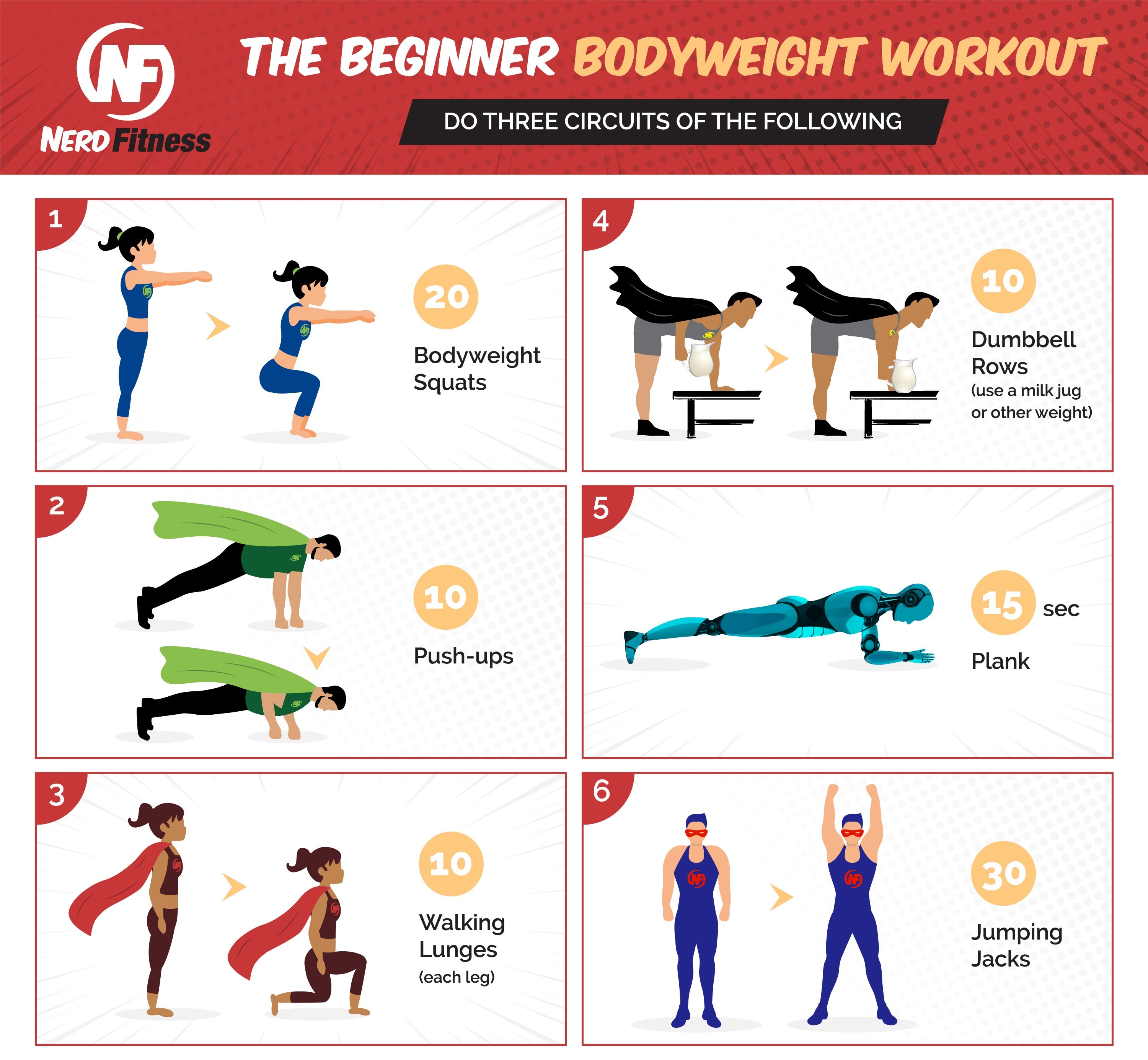
Credit: www.nerdfitness.com
:max_bytes(150000):strip_icc()/resize-15bf3cfd1e4a4b0e866707a2a731a769.png)
Credit: vicentetorns.com
Frequently Asked Questions
What Are The Best Bodyweight Exercises For Beginners?
Best beginner exercises include squats, push-ups, lunges, planks, and glute bridges. These target major muscle groups and improve strength, balance, and flexibility without equipment.
How Often Should Beginners Do Bodyweight Workouts At Home?
Beginners should start with 3 sessions per week. This frequency allows muscle recovery and gradual strength building. Each session can last 20 to 30 minutes.
Can Bodyweight Exercises Build Muscle Without Weights?
Yes, bodyweight exercises can build muscle by increasing repetitions and intensity. Progressive overload is key for muscle growth, even without weights.
Are Bodyweight Exercises Effective For Weight Loss?
Bodyweight exercises burn calories and boost metabolism, aiding weight loss. Combining them with a healthy diet enhances fat loss results efficiently.
Conclusion
Bodyweight exercises at home build strength and improve fitness. No equipment needed. Start slow and focus on good form. Consistency brings better results over time. You can stay healthy without a gym. Simple moves fit any schedule. Keep your routine fun and varied.
Feel stronger each day. Your body will thank you.